

When the House Goes Quiet: Navigating Empty Nest Anxiety
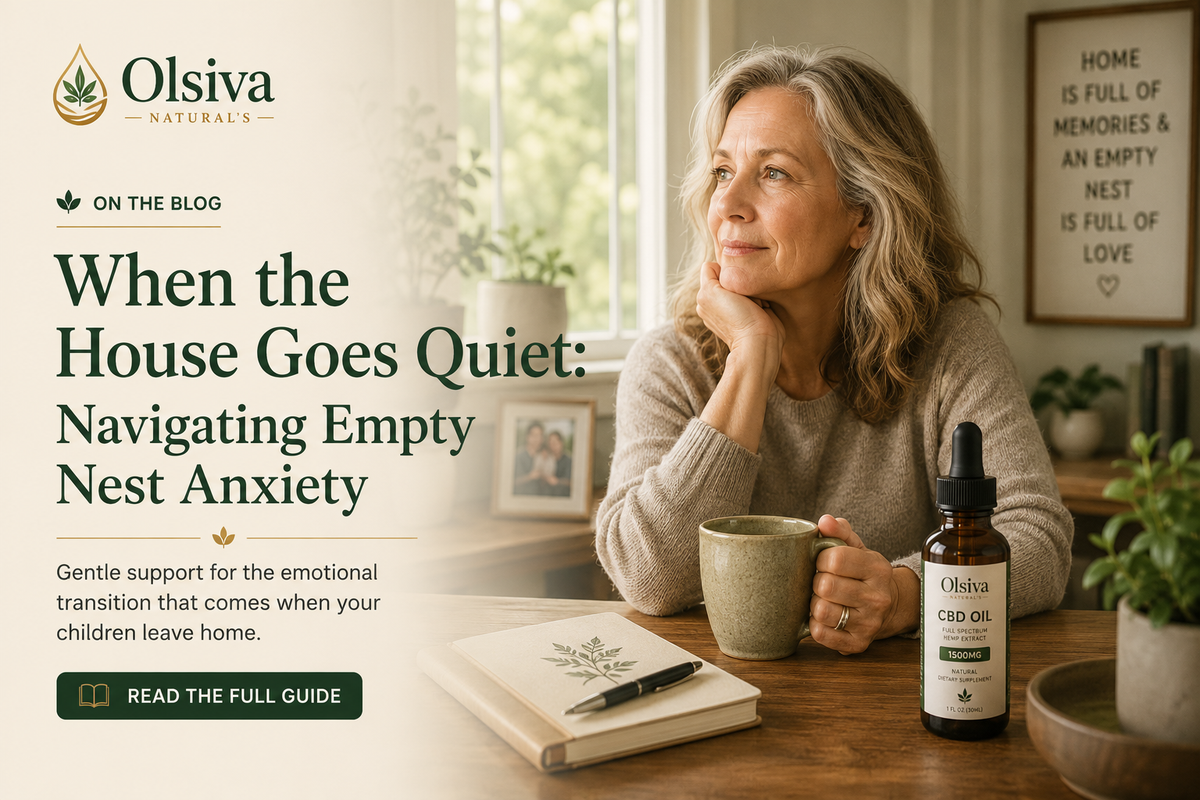
Everyone prepares parents for the chaos of raising kids. Almost nobody prepares them for the quiet that follows. When the last child leaves for college or moves out, more than half of American parents report real distress in response — not a passing pang, but genuine sadness, anxiety, and loneliness that can last a year or longer. It has a name, empty nest syndrome, even though it isn't a formal clinical diagnosis. And it tends to arrive in late summer, right around the same weeks that get all the "back-to-school" attention aimed at parents of younger kids.
Why this transition hits harder than people expect
The symptoms cluster in a fairly consistent pattern: sadness, a specific kind of loneliness tied to an empty house rather than general isolation, anxiety about how your child is doing without you there to see it, and something less talked about — a loss of identity. If a meaningful part of your daily structure and sense of purpose has been built around parenting for eighteen-plus years, its sudden absence isn't just an emotional adjustment. It's a schedule, a role, and a source of daily meaning all changing at once.
Research on this consistently finds it hits stay-at-home parents and single parents hardest, and mothers report sadness and loss of purpose more often than fathers — likely because caregiving roles are still frequently more centered on one parent, making the sudden absence of that role more disorienting.
It's not "just" the house being quiet
What makes empty nest syndrome different from ordinary sadness is that it often overlaps with other things already happening in midlife — a parent's own aging, shifting marriage dynamics now that daily co-parenting logistics aren't the main shared project, career questions, and sometimes caring for aging parents at the same time your own kids are leaving. It's rarely just one thing. That's part of why it can linger longer than people expect it to.
What tends to actually help
- Naming it, rather than pushing through it. Because it isn't a formal diagnosis, a lot of parents minimize what they're feeling or assume they should just be happy their kid is thriving. Both things can be true at once — pride in your child's independence and genuine grief over the role you've lost.
- Rebuilding structure deliberately, not by accident. The parents who adjust fastest tend to be the ones who proactively fill the freed-up time and identity space with something, rather than waiting to see what happens. This doesn't need to be dramatic — a class, a volunteer commitment, reconnecting with a friendship that got deprioritized for a decade.
- Protecting the relationship with your partner, if you have one. Years of parenting logistics can crowd out a couple's shared identity outside of "Mom and Dad." This transition, uncomfortable as it is, is also an opening to rebuild that.
- A consistent evening wind-down matters more in this season than people expect, since a quiet house at 7 p.m. can feel very different — and much emptier — than it did when it was full of noise. A small, repeatable ritual (tea, a walk, a CBD tincture at the same time each evening) gives the newly quiet hours a shape again.
When it's more than adjustment
Most parents move through this within a few months to a year as new routines take hold. If the sadness, anxiety, or loss of purpose isn't easing, or is affecting your ability to function, that's worth a conversation with a therapist — empty nest syndrome overlaps significantly with clinical depression and anxiety, and a mental health professional can help distinguish between a normal, painful transition and something that needs more support.
The house getting quieter is, in its own way, a sign that the job you spent two decades doing went well enough that your kid felt ready to leave. That doesn't make the quiet easier to sit in right away. It just means the grief is a strange kind of proof that the parenting worked.
Olsiva's THC-free tinctures and softgels are a small, consistent addition to a new evening routine — nothing dramatic, just something steady while the rest of the house finds its new rhythm.
These statements have not been evaluated by the Food and Drug Administration. This product is not intended to diagnose, treat, cure, or prevent any disease. If feelings of sadness, anxiety, or loss are persistent or affecting your daily functioning, consult a physician or mental health professional.